- 4.5 Trustpilot Rating
- 200,000+ Happy Customers
- No Deposit Until you are 100% satisfied


- 0800 328 2228
- info@upvccompany.co.uk
-
UPVC Company
Units 1
Etna Industrial Estate
Craigneuk
Wishaw
ML2 7XQ
Find clear answers to the questions homeowners commonly ask before replacing their windows and doors. Whether you are comparing double glazing, choosing between uPVC and composite doors, or deciding which window style will suit your property, our FAQs are designed to help you make an informed decision.
The uPVC Company supplies made-to-measure uPVC windows and doors throughout the UK and provides professional installation across Central Scotland. With more than 200,000 installations completed, our experienced team can help you choose the right products for your home, budget, security requirements and preferred style.
Yes. You may prefer casement windows in bedrooms, tilt and turn windows in upper-floor rooms, sash windows at the front of a traditional property and a bay window in the living room. The design should consider ventilation, access, appearance, safety and the character of your home.
Planning permission is not always required, but restrictions can apply to listed buildings, conservation areas and properties subject to special planning controls. Homeowners should check with their local authority before changing the material, appearance or proportions of existing windows.
The uPVC Company can help you select frame colours, glazing patterns, hardware and decorative details intended to complement your property. A survey will establish the opening sizes and help determine which design most closely reflects the existing windows.
Yes, subject to a detailed survey of the opening, roof, base, supports and surrounding structure. Bay windows are more complex than standard flat windows, so accurate measurement and careful installation are particularly important.
Because they project outwards from the main wall, bow and bay windows can create additional internal space and a wider outlook. The area can sometimes be used for seating, shelving or display space, depending on the construction and design.
Yes. Their angled or curved arrangement allows daylight to enter from several directions. This can brighten the room and provide a broader view than a standard flat window, although the exact result depends on the property’s orientation and surroundings.
They can be energy efficient when the complete installation including the frames, glazing, roof, base, seals and junctions are properly specified and fitted. Because there are more sections and connections than in a standard window, installation quality is especially important.
Yes. A combination of fixed and opening casement sections can normally be designed around your ventilation and access requirements. The uPVC Company can recommend a balanced layout that maintains symmetry while providing practical airflow.
The price depends on the size, number of sections, glazing, opening configuration, roof and base condition and whether structural work is needed. A property survey is therefore essential before an accurate quotation can be prepared.
uPVC doors are designed to withstand normal UK weather conditions without requiring regular painting. Correct installation, drainage, seals and threshold selection remain essential, particularly at exposed entrances.
An outward-opening configuration may be possible where the layout, safety and external space allow. The direction of opening should consider steps, paths, neighbouring boundaries, wind exposure and emergency access.
Because replacement uPVC doors are made to suit the surveyed opening, many non-standard sizes can be accommodated. The uPVC Company will measure the opening and confirm which door styles and configurations are practical.
Yes. Coordinating the frame colour, glass and hardware can create a consistent appearance across the property. Exact matches depend on the available product ranges, so colours and samples should be compared before ordering.
Composite doors are generally low maintenance and do not require the regular painting associated with traditional timber doors. Routine cleaning and occasional checks of the locks, hinges, seals and drainage points will help maintain their appearance and operation.
Yes. Composite doors are available in a wide selection of traditional, neutral and contemporary colours, often with woodgrain-style finishes. Different internal and external colours may also be available, depending on the selected range.
Yes. Decorative, obscure and clear glass options can be incorporated into many composite door designs. Sidelights or glazed panels around the door may also be possible where the opening is sufficiently wide.
A composite door may justify a higher initial price for homeowners who value a substantial feel, distinctive appearance, low maintenance and strong overall performance. The uPVC Company can compare uPVC and composite options so you can choose based on long-term value rather than price alone.
Yes. Accurate surveying is essential because replacement windows and doors are manufactured to suit the property’s openings. The survey also allows access, structural conditions, opening directions, thresholds and installation details to be checked.
You should remove curtains, blinds, ornaments and furniture from the immediate area around each window or door. The installation team can advise how much access is required. Valuable or fragile items should always be moved before work begins.
Your details will only be used for the purpose of fulfilling your enquiry in accordance with our privacy policy – click here to read.



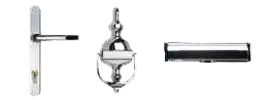
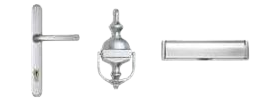
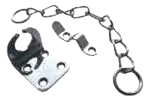

Every UPVC Company door is packed with security features. That means you get even more peace of mind that your home is well protected against burglars.
Having chosen the style of door that’s right for your home, you’ll want to add all the right accessories too.
Our extensive range of elegant and practical door furniture has been specially designed to enhance the style and performance of your double glazed door.